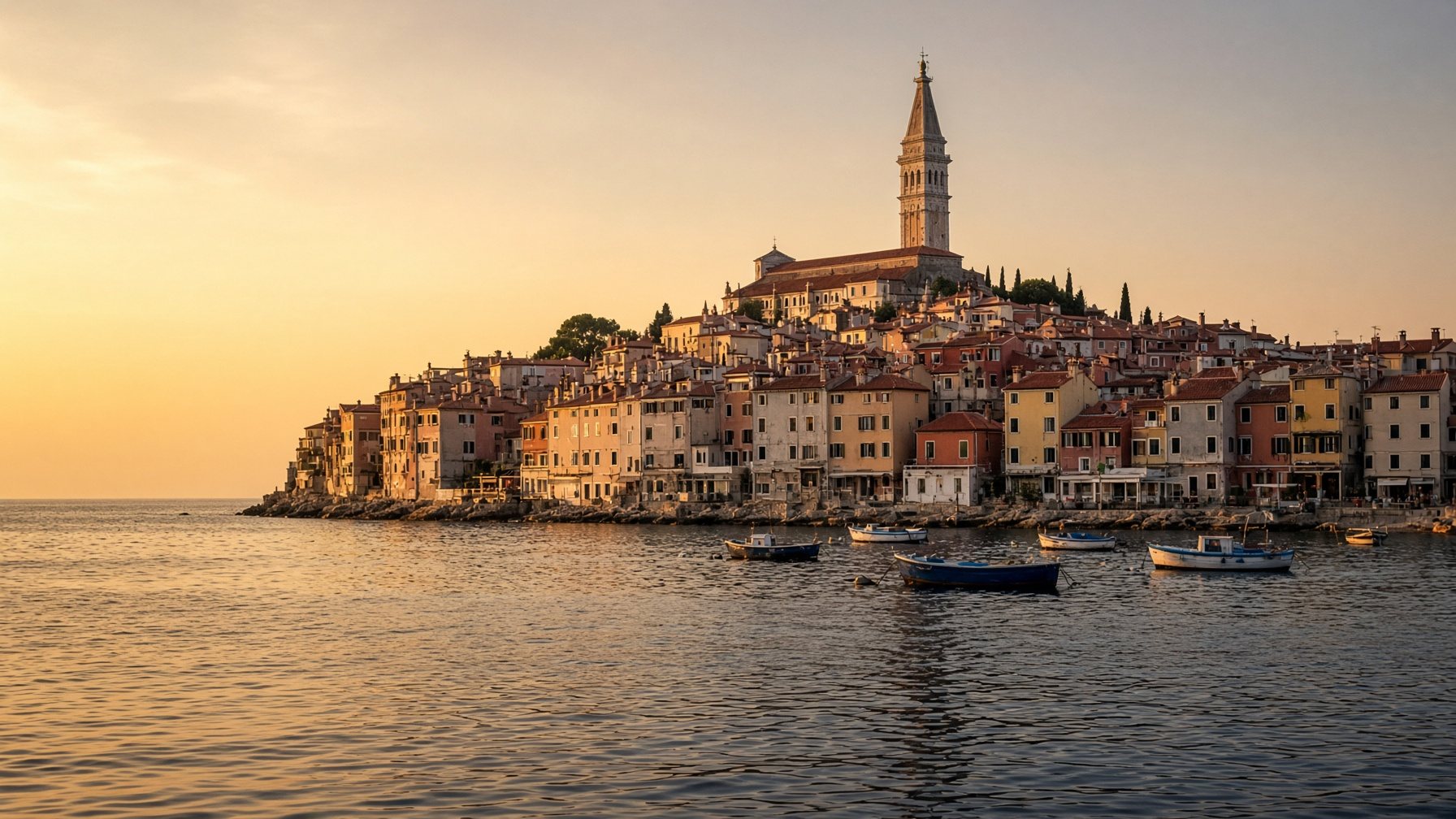
Rovinj-Rovigno, Istria
Stay in Rovinj, don't just visit it.
Vacanze Rovigno brings together houses owned by Italians in Rovinj. No booking commission: you write to the owner and deal with the owner.
The houses
A few houses, chosen one by one
Italian owners of houses in Rovinj who let them themselves and would rather not hand fifteen or twenty per cent to a platform. If the house is cared for and the photographs are good, it works. If it is an anonymous flat to be filled at any cost, the general platforms will do better than we can.
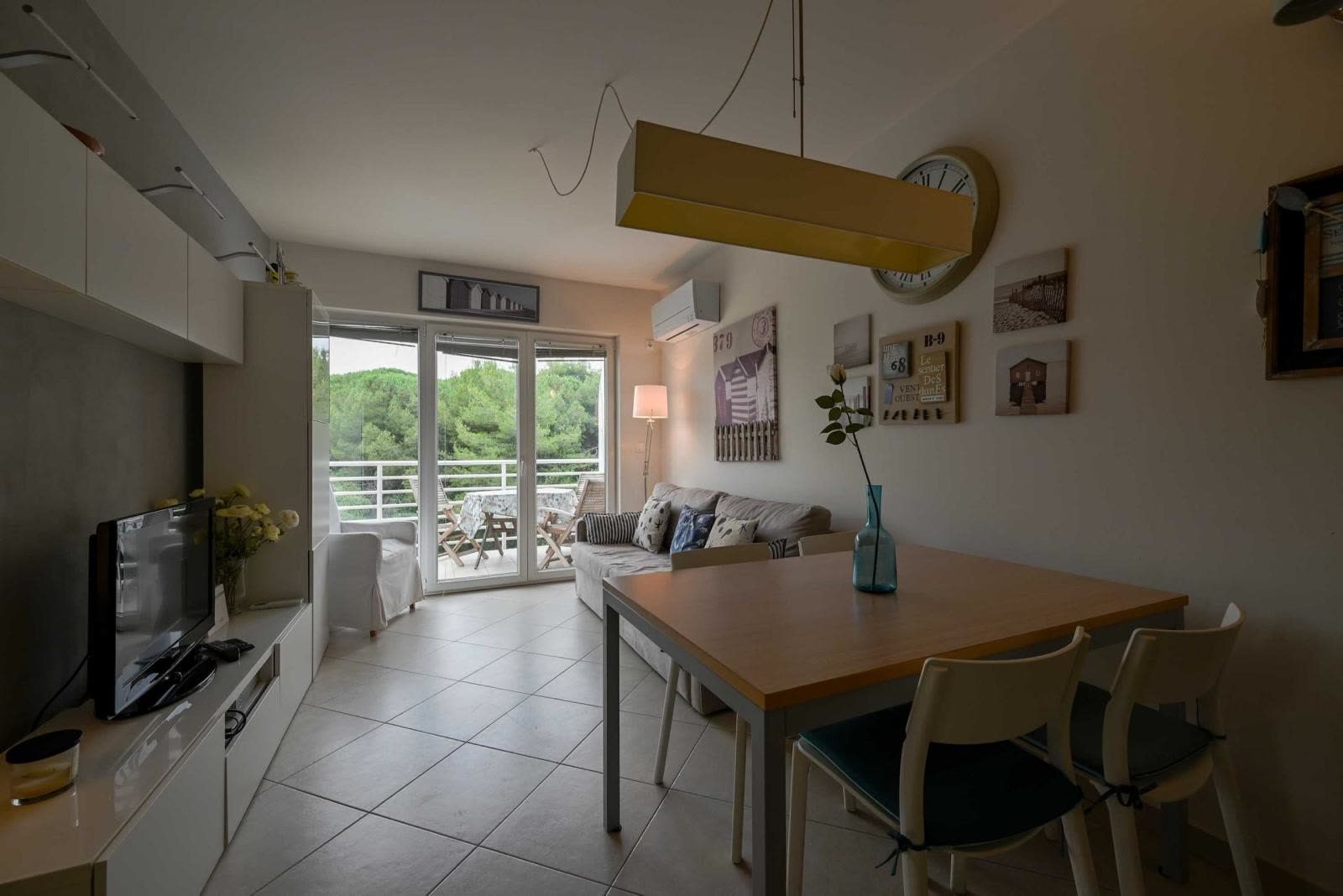
Casa Centener
Centener, south of the old town
Split-level with mezzanine and a terrace over the pinewood. Beach 8 minutes on foot, parking at the door.
Yours could be here
We are selecting the next houses for the season. If you have one in Rovinj, let's talk.
Propose your houseFor owners
Do you own a house in Rovinj?
Vacanze Rovigno is an Italian portal for Italian-owned houses in Rovinj. You publish yours, guests write to you, and you set the price.
Propose your house- No commission
- Enquiries come to you
- A selection, not a catalogue
The seasons
What separates June from August is not the weather
It is how much of the town you actually get to see. Tap a month to find out what you would find, and what the flat costs then.
The town
Rovinj, in Istria
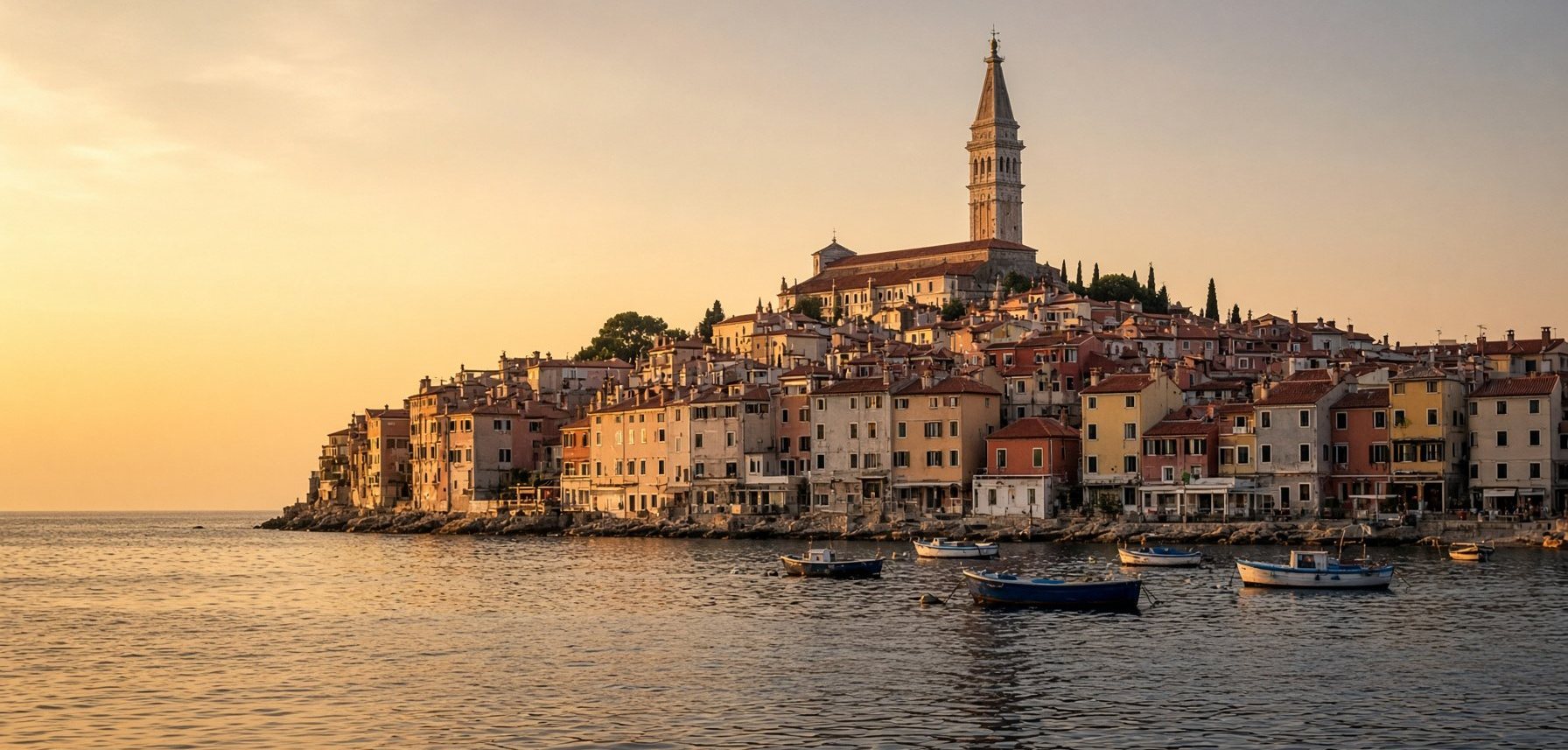
A peninsula of pastel houses, five centuries of Venice, a harbour full of batana boats and a rocky sea. Small, walkable, and still lived in through the winter.
The old town
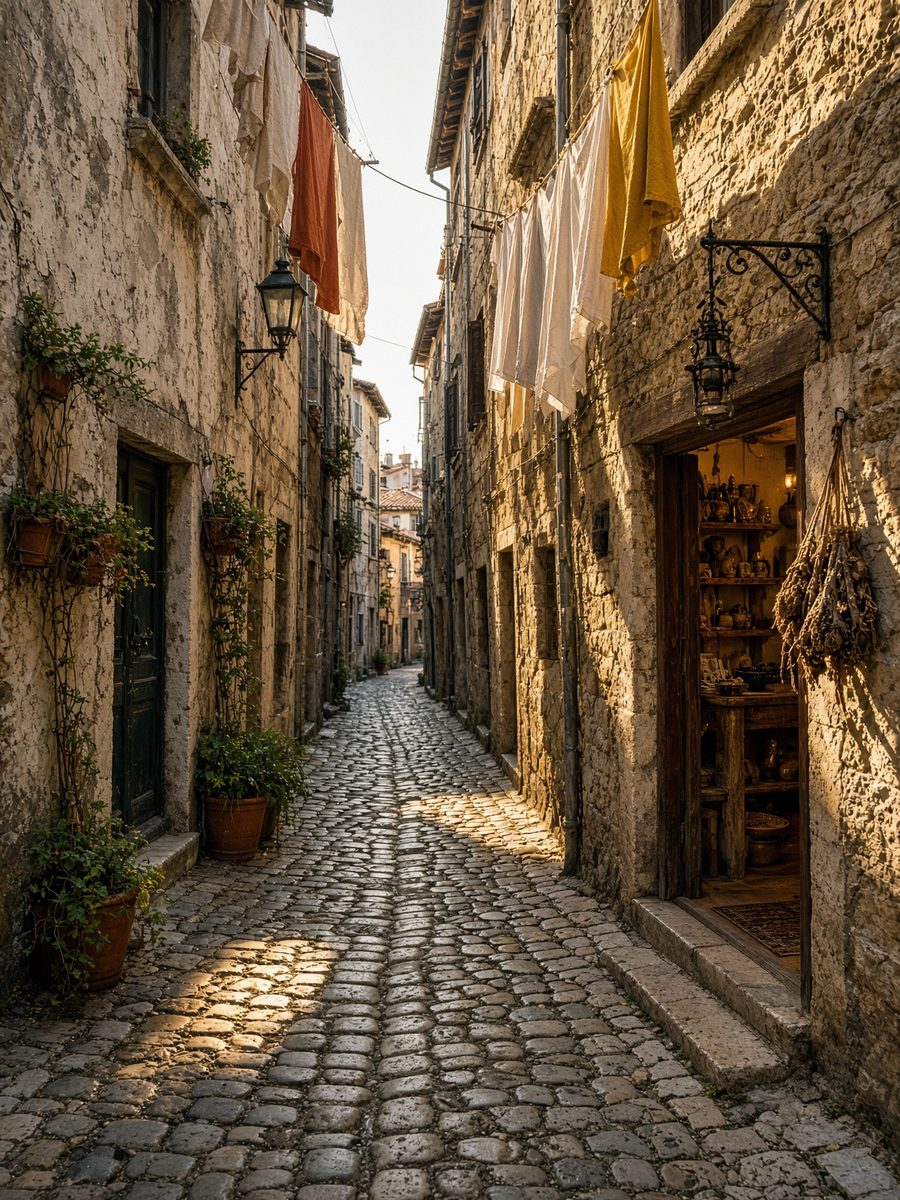
You come in through the Balbi Arch, the old Fish Market Gate turned into a baroque arch in 1678-79: a Turk's head on the outer keystone, a Venetian's on the inner one. From there Grisia climbs past the art shops to the top of the peninsula.
Until 1763 Rovinj was an island. The channel that separated it from the mainland was filled in, and ever since the town has been the peninsula you recognise from any boat.
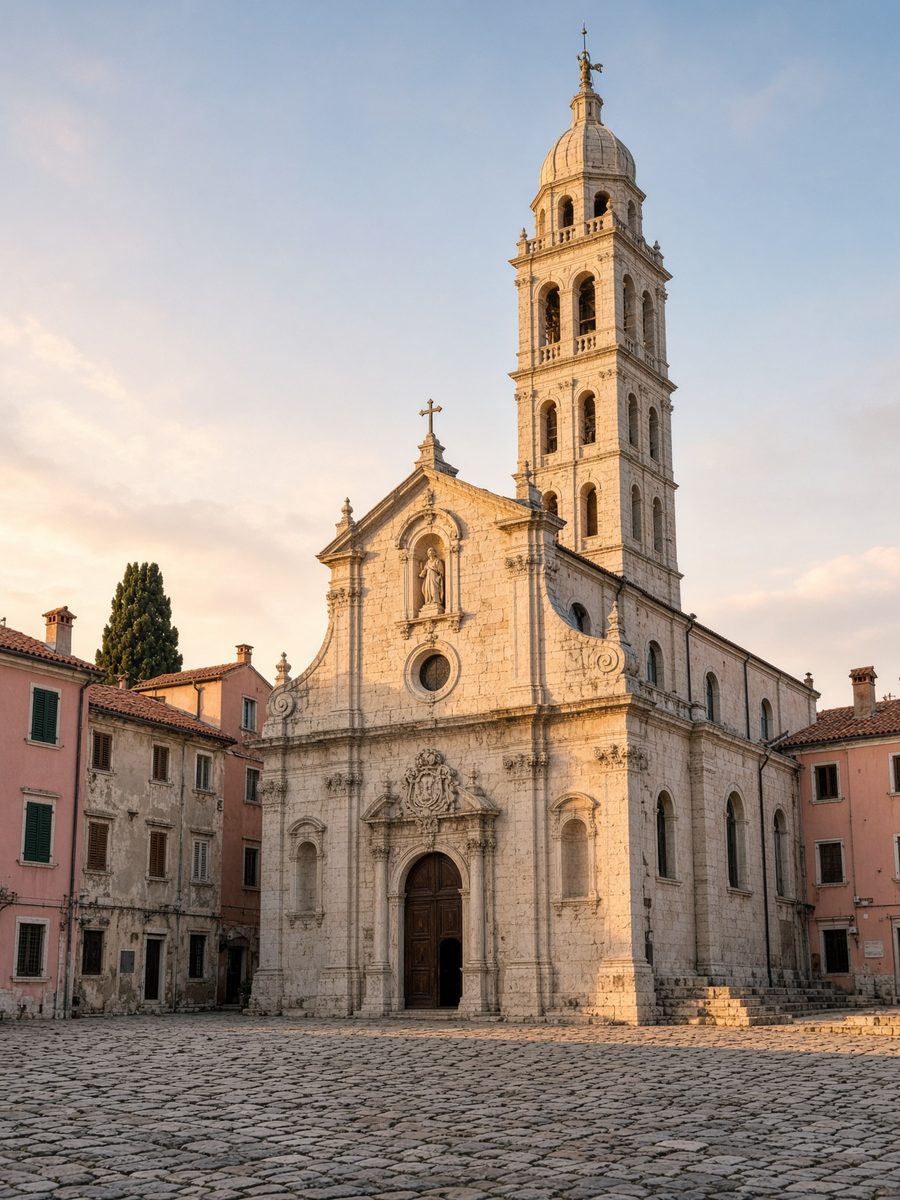
St Euphemia
The bell tower follows Venetian prototypes and was built between 1654 and 1687: at sixty metres it is the highest point in Istria. On top, the statue of the saint, placed there in 1758, turns with the wind like a weather vane.
Inside the church stands the sarcophagus of St Euphemia, which by tradition arrived by sea. The climb is steep and worth the view over the roofs and the islands: at dawn there is nobody there.
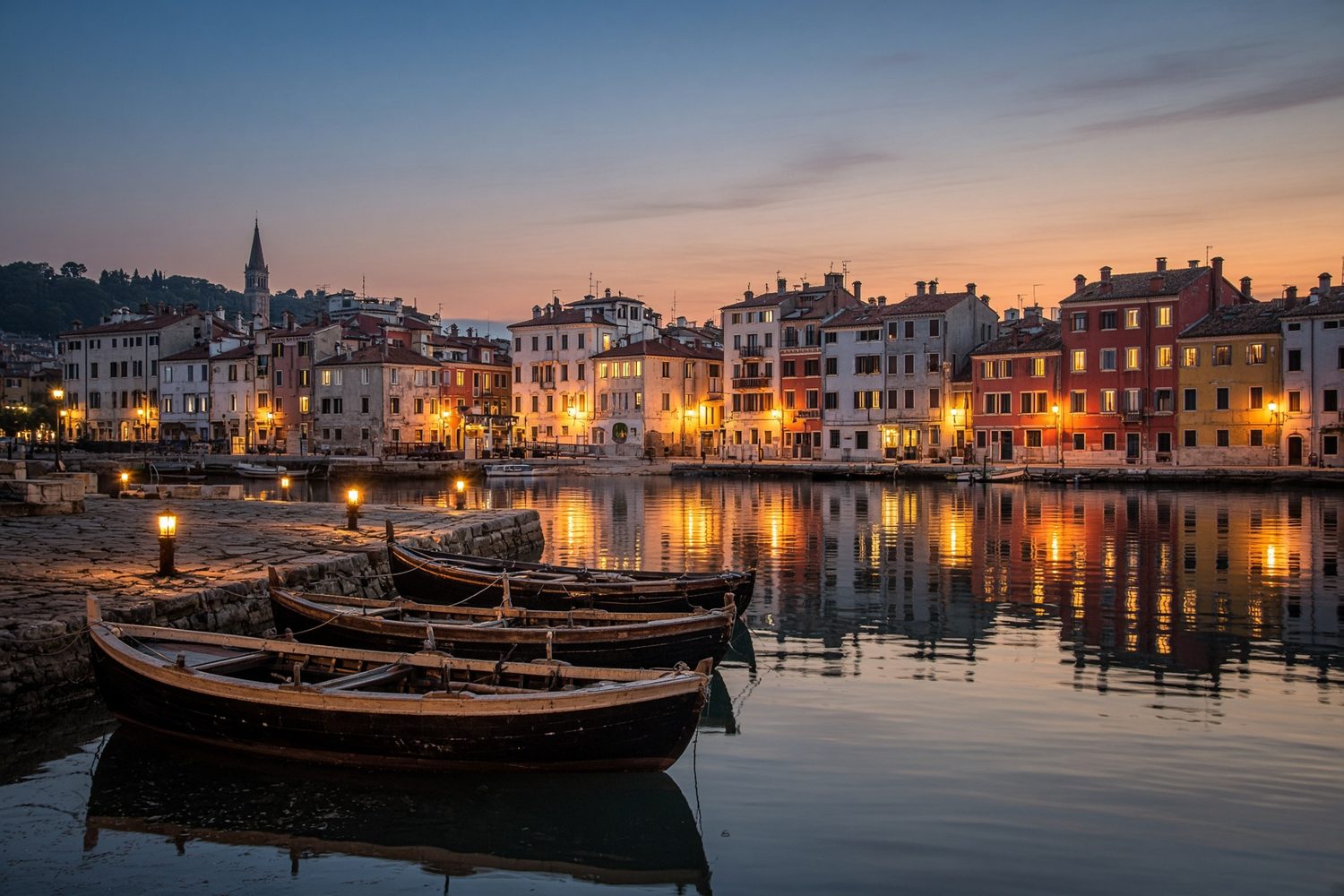
The harbour and the islands
Twenty-two islands and islets. Sveta Katarina is a few minutes away by taxi boat; Crveni Otok, the Red Island, has pebble beaches and pine trees and is worth half a day. At sunset the harbour reflects the Venetian façades, which is why nobody actually walks along the quay at that hour.
The batane, the local fishing boats, are recognised by UNESCO: the Batana House tells their story, and in summer you can have dinner at the spacio on the waterfront.
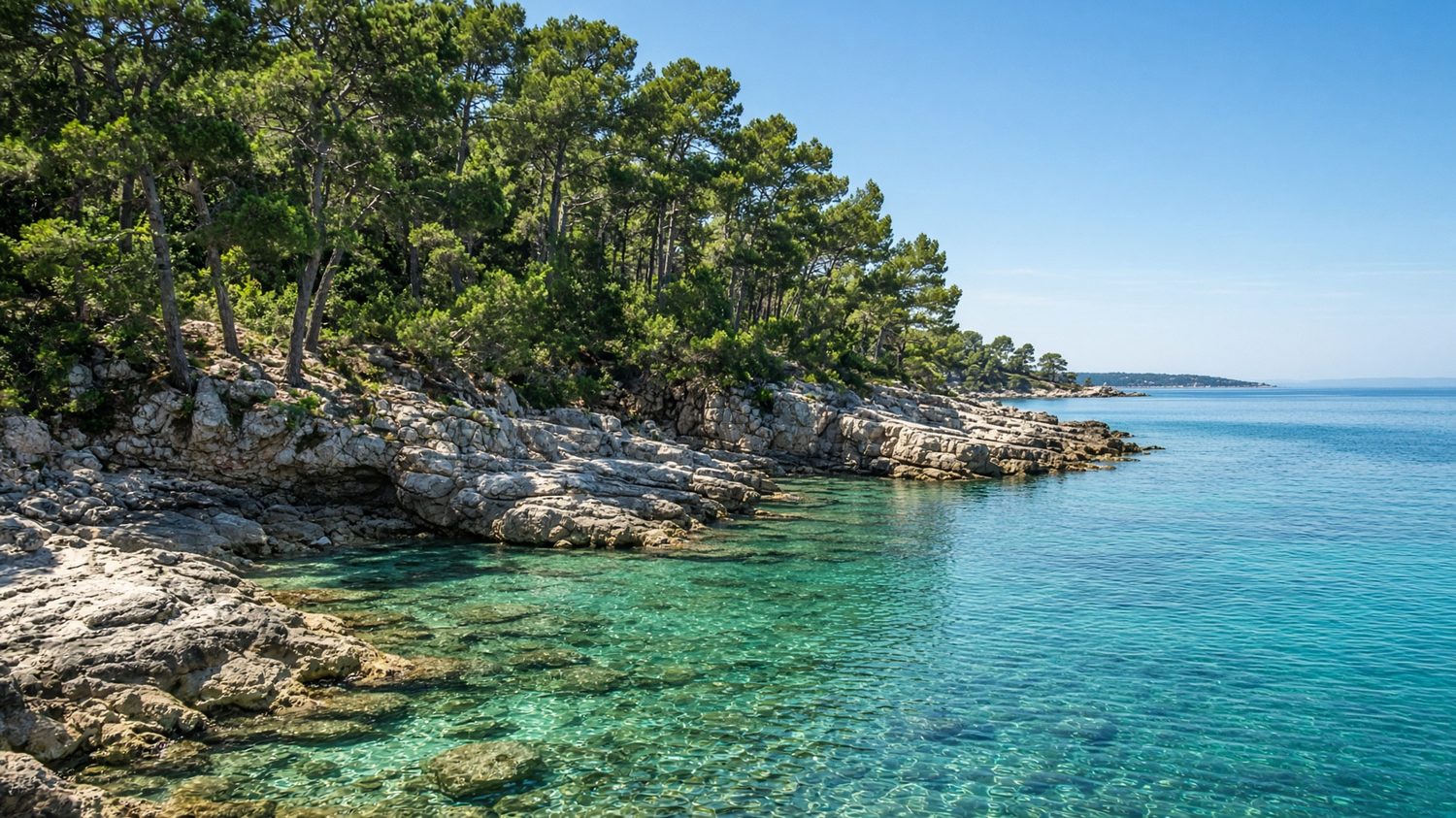
Punta Corrente
Zlatni rt, the Golden Cape: a park of pines, cedars and cypresses laid out in the nineteenth century by Baron Georg Hütterott. Rocky coves, clear water, paths for walking and cycling.
It is not sand, it is Istria: you get into the water from smooth rocks or shingle, which is exactly why you can see the bottom. Swimming shoes are serious advice, especially for children.
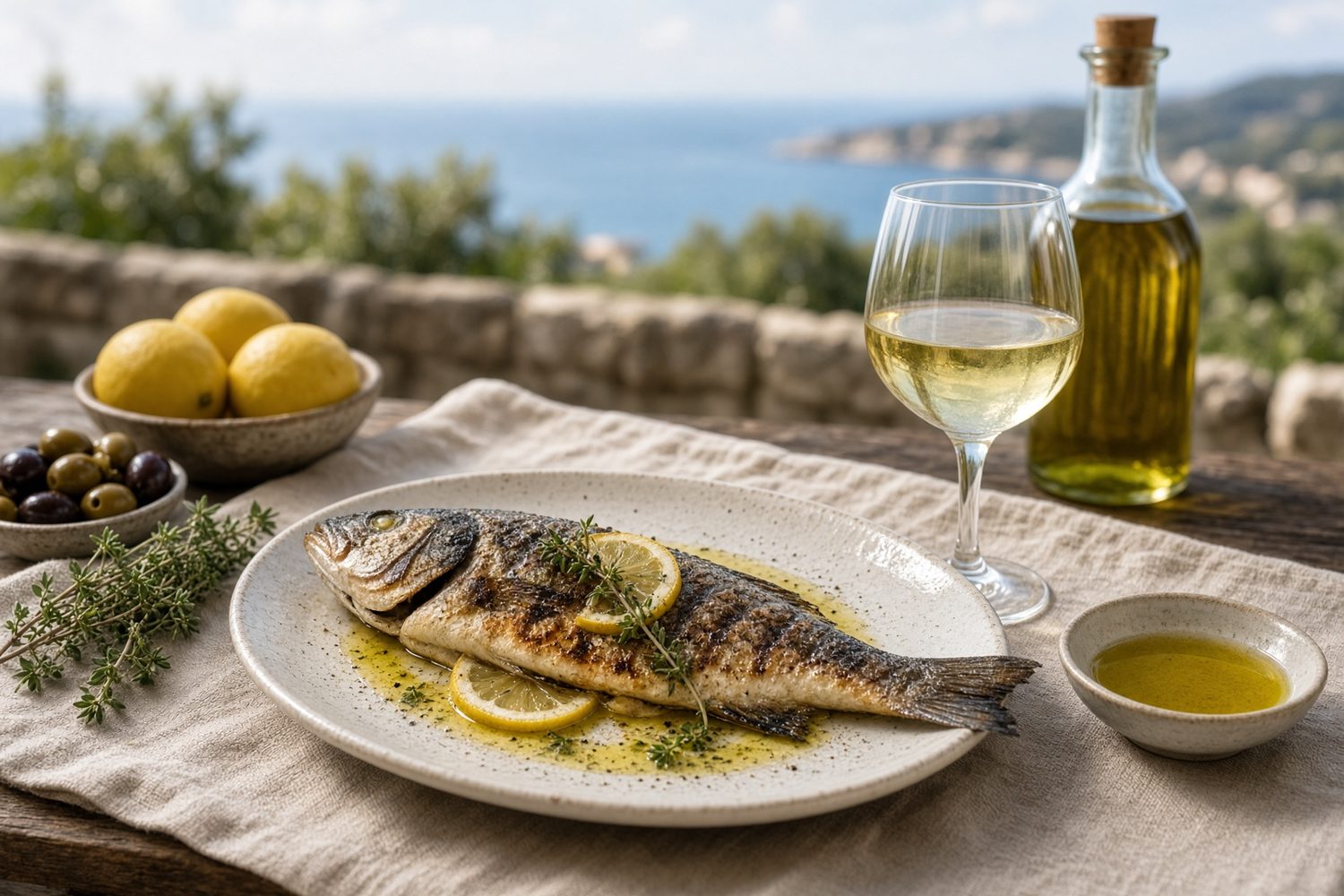
At the table
Rovinj is now the gastronomic capital of Croatia: in the 2026 Michelin guide it keeps Agli Amici with two stars, the only two-star restaurant in the country, and Monte and Cap Aureo with one star each.
Below that level are the neighbourhood konobe, where you eat the day's catch without ceremony. The addresses, along with the market and the shops, are further down.
A day out
The Lim fjord to the north, with its oyster and mussel beds. Bale and Vodnjan, stone villages twenty minutes away and almost without tourists. Motovun and Grožnjan, an hour away among the Malvasia vineyards.
Pula is half an hour away, with its Roman amphitheatre and covered market. Poreč forty minutes, for the mosaics of the Euphrasian Basilica.
With children
The pinewood below the flat, the shallow water at Cuvi and the parking space at the door make the day simpler than in the old town, where every move involves a flight of steps.
The children's room has bunk beds, and with two bathrooms the morning does not turn into a queue. Cot and high chair on request, at no extra charge.
Eating and shopping
Where to eat and where to shop
With a kitchen in the flat, the market matters as much as the restaurant. Below are the places we actually name when guests ask, sorted by occasion.
The starred tables
Rovinj is now the gastronomic capital of Croatia. These are dinners to book weeks ahead, not to attempt on the night.
- Agli Amici — two Michelin stars, by the marina. The only two-star in the country.
- Monte — one star, at the foot of St Euphemia. Tasting menus only.
- Cap Aureo — one star, contemporary Istrian cooking.
On the water
For the evening when the setting matters more than the plate. At sunset the outside tables go early.
- La Puntulina — Ul. Sv. Križa 38, tables on the rocks below the old town.
- Kantinon — Obala Alda Rismonda 18, on the old harbour front.
- The rocks around Puntulina — the walk there is part of the dinner.
The konobe
Where you eat the day's catch and home-made pasta without ceremony. A third of the price, and often the meal you remember.
- Konoba Jure — Cademia 22, outside the centre: fuži with truffle and wild boar goulash.
- Konoba Tugurio — on the edge of town, Istrian cooking and a terrace.
- Konoba Neptun — Ul. Joakima Rakovca 10, the oldest pizzeria in Rovinj.
Valdibora market
Where the people of Rovinj do their shopping, a step from the old town. It is also the cheapest way to eat very well.
- Fruit, vegetables, cheeses, pršut, honey and herbs.
- The fish market is next door: the day's catch, to cook at home.
- Go early: by midday the best of it has gone.
- For a big shop, the supermarkets are outside the old town.
The shopping streets
Rovinj has no malls: it has two streets and a maze of small shops.
- Carera — the main street, everyday shops and boutiques.
- Grisia — galleries, ceramics, handmade jewellery and prints.
- Many shops close between 1 and 4 p.m.: go in the morning or late afternoon.
What to take home
The things that genuinely earn their place in the suitcase, and cost twice as much back home.
- Istrian olive oil — among the most awarded in the world for years now.
- Malvazija and Teran — the two Istrian wines, white and red.
- Truffle — creams and preserves, from inland.
- Honey, lavender, herb grappa and ceramics from Grisia.
Names, opening hours and closing days change with the season: before you set out, make a call or check the map. If you need a hard table in high season, write to us a few weeks ahead and we will try.
Getting here
How to arrive, and what to know
Rovinj has no airport of its own. A car remains the freest way to see Istria: good roads, hill towns and wineries all within a day's reach.
The airports
| Pula (PUY) | 35–45 min | The simplest choice, especially in summer. We can arrange the transfer. |
| Trieste (TRS) | about 2 hours | Convenient if you are coming from north-eastern Italy. |
| Venice (VCE) | about 3 h 30 | More international connections. Best with a hire car. |
| Ljubljana (LJU) | about 2 h 30 | A good alternative all year round. |
By car: an hour and a half from Trieste, three and a half from Venice, seven from Munich. You cross the Schengen border without systematic checks, but you do need your ID. In summer Venezia Lines and Adriatic Lines run catamarans from Venice to Rovinj.
On the spot
- Currency: euro. Croatia has been in Schengen since 2023.
- The old town is pedestrian: leave the car outside.
- Here in Centener the parking space is below the building, included.
- Tap water is drinkable.
- Emergencies: 112.
- We register you in eVisitor within 24 hours: every guest needs an ID document, children included.
What to pack
- Comfortable shoes: the old town is cobbles and worn stone.
- Swimming shoes, or sandals with a proper sole.
- A jumper for June and September evenings.
- A snorkelling mask: the real show is under the surface.
Before you book
The questions everyone asks
What are the check-in and check-out times?
Check-in from 4 p.m., check-out by 10 a.m. If the flat is free the day before or after we can stretch it: ask, and it usually works.
How many people really sleep here?
Eight, counting the sofa bed in the living room. Six in bedrooms: a double on the mezzanine, a double in the second bedroom, bunk beds in the children's room.
Can I bring my dog?
Yes, on request, for a supplement of €20 a night. Tell us when you write: the pinewood below the flat is the right place for him.
Where do I park?
Below the building, at no extra cost and without looking for a space. It is one of the reasons this area works better than the old town, where cars cannot go.
Can you walk to the sea?
Yes. Cuvi is eight minutes away, Punta Corrente twelve. It is rock and shingle, not sand: bring swimming shoes, above all for children.
How do I pay?
A deposit on confirmation, the balance before arrival. Bank transfer, with a receipt. We set out the exact terms when we reply to your enquiry.
Cleaning and linen?
Final cleaning included, linen and towels provided. For longer stays we agree the change with you.
Does everyone need an ID document?
Yes. Croatian law requires us to register every guest in the eVisitor system within 24 hours of arrival, newborns included.
Enquiry
Send us your dates and we will reply
Your enquiry goes to info@vacanzerovigno.it and we read it ourselves, not a call centre. We usually reply within 24 hours.